UNESCO Chair Co-hosted an International Seminar on “Building Balanced Development of Public Schools in China: Through A School Collaboration Approach”
 unesco3
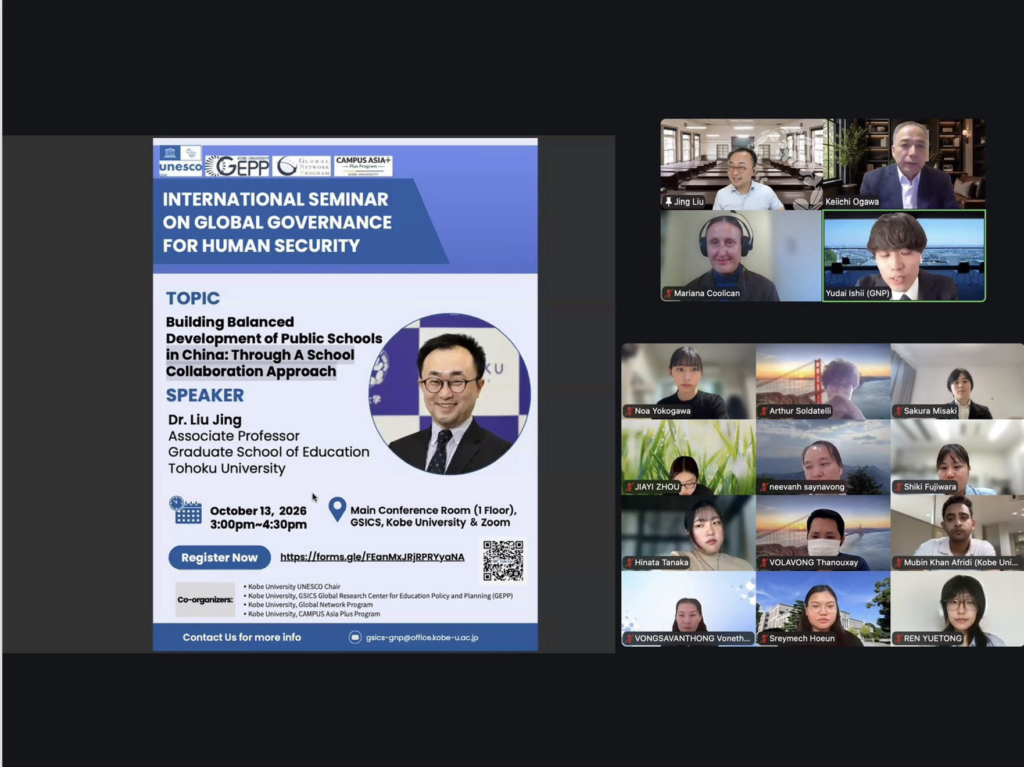
On October 13, 2026, the International Seminar on Global Governance for Human Security was held under the theme “Building Balanced Development of Public Schools in China: Through A School Collaboration Approach.” The seminar was conducted online via Zoom. It was co-organized by the Kobe University UNESCO Chair, the Global Research Center for Education Policy and Planning (GEPP), the Global Network Program, and the CAMPUS Asia Plus Program.
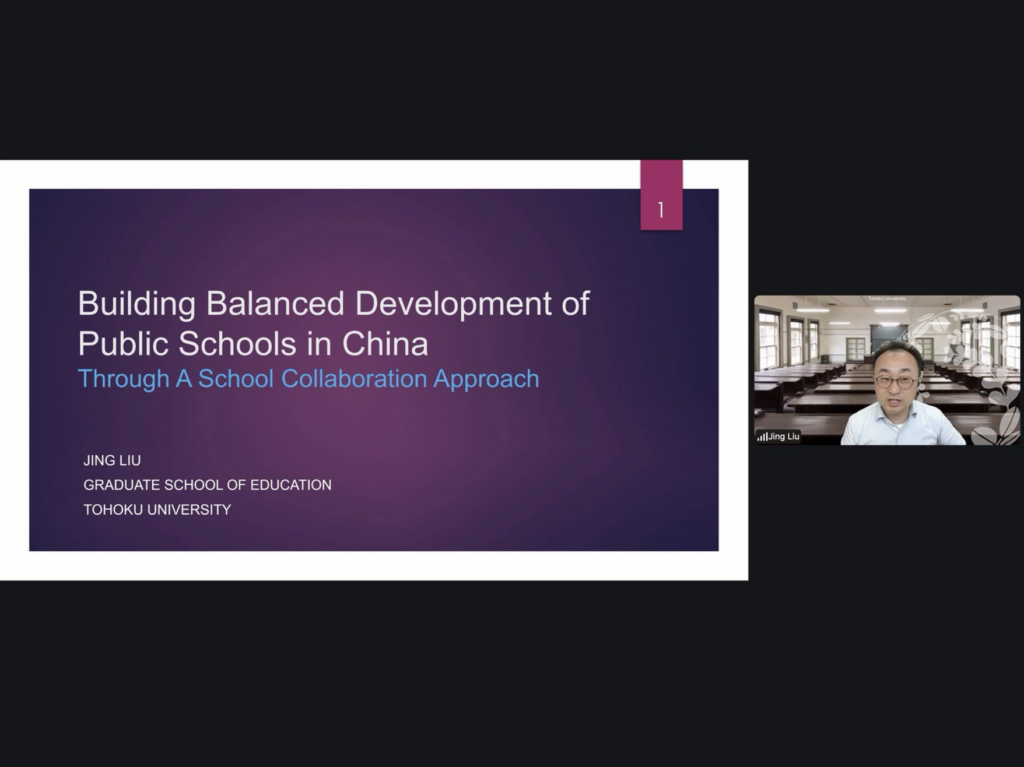
The seminar featured Dr. Jing Liu, Associate Professor at the Graduate School of Education, Tohoku University. He began by reviewing international approaches to school collaboration for educational improvement and outlining disparities in educational resources across regions, between urban and rural areas, and among schools in China, alongside challenges surrounding school choice. He then introduced “education groups,” a government initiative intended to promote the balanced development of compulsory education. These groups link high-performing schools with other schools, including newly established and rural schools, to improve educational quality through shared school branding, educational philosophies, management practices, and teacher training.

Dr. Liu went on to present a case study of education groups in a district of Chengdu City, Sichuan Province. Drawing on policy document analysis and interviews with 20 education officials, principals, and teachers, the study examined the interaction between institutional arrangements established by government authorities and innovations emerging from schools. The findings illustrated how exchanges among teachers and school leaders, shared curricula and collaborative lesson study, and ICT-based collaboration with schools in remote areas could support access to educational resources and teachers’ professional development. The study also highlighted challenges, including concerns about school homogenization, insufficient alignment of educational philosophies among member schools, and inconsistencies across education, personnel, and financial policies at the central and local government levels.
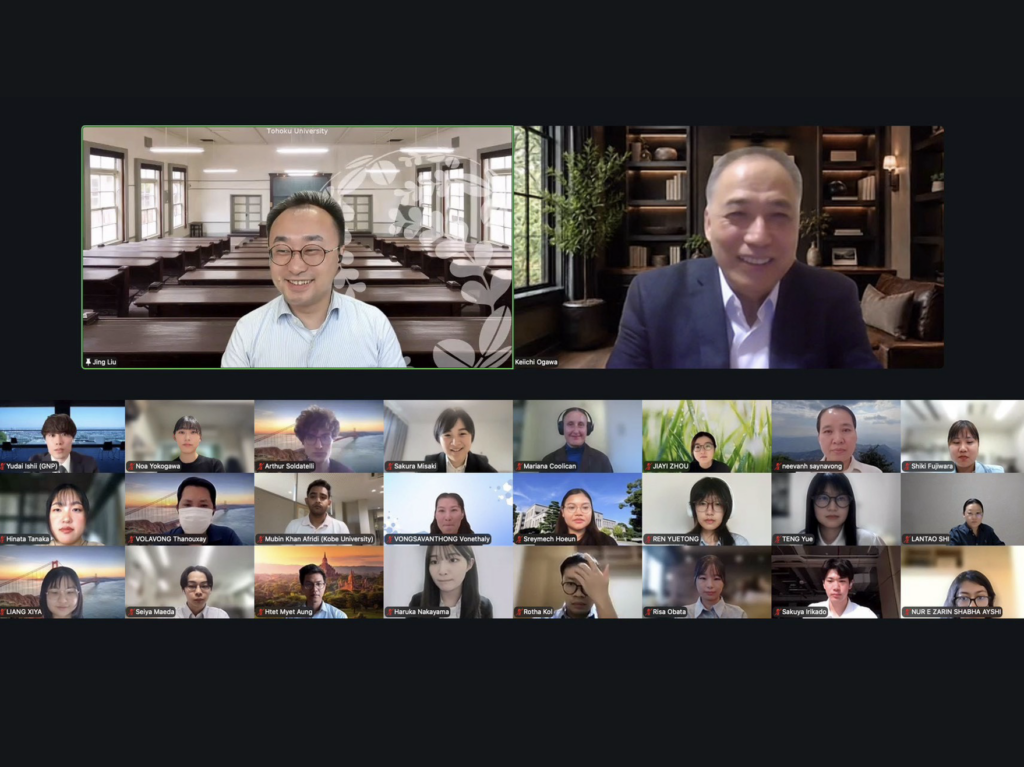
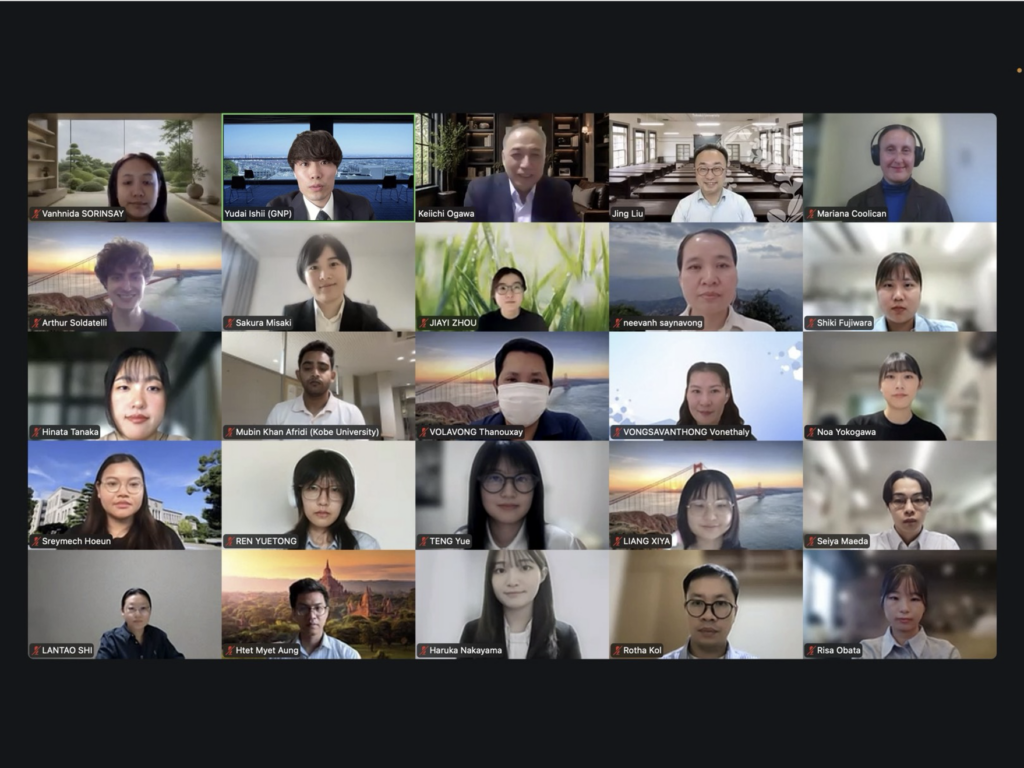
A total of 58 participants attended the seminar online. The lecture emphasized the importance of connecting government policy initiatives with school-level innovations, developing shared values and educational philosophies, and respecting each school’s distinctive characteristics and autonomy. The seminar provided a valuable opportunity to consider how school collaboration can contribute to reducing educational disparities and improving quality, as well as the institutional arrangements and school management practices needed to sustain such collaboration.