


Sponsored by



TOPICS
- Space Radiations
- Nuclear Physics and Chemistry
- Nuclear Track Physics and Chemistry
- Applications of Nuclear Emulsion
- Luminescence Materials for Radiation Measurements
- Laser Driven Particle Acceleration
- Hadron Therapy and Radiation Biology
- High-Z Nano Particles
- Neutron Measurements and Analysis
- Heavy Ions and Nanotechnology
- Radon and Geology, Dating
- Natural and Human-Enhanced Radioactivity
- Detections of Cold Fusion Products
Invited Speakers
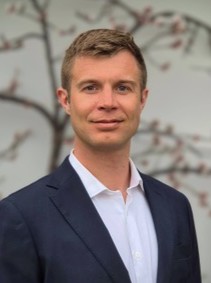
Dr. Jeppe Brage Christensen,Paul Scherrer Institut, Switzerland
Measurements and modeling of neutron and light-ion fields using solid-state detectors and track structure theory
This presentation will discuss recent progress in the measurement and interpretation of neutron and light-ion fields using solid-state detectors, with particular emphasis on optically stimulated luminescence (OSL) and polyallyl diglycol carbonate (PADC) detectors. More broadly, it will highlight the role of solid-state detector systems in the characterization of mixed radiation fields and in the development of models for understanding detector response based on amorphous track structure theory.
For OSL-based detectors, the focus will be on measurements of radiation quality in light-ion fields, with particular attention to the assessment of linear energy transfer (LET) and its influence on detector response. The talk will address how OSL signals can be used not only for absorbed dose measurements, address the effect of overlapping particle tracks, and demonstrate spatially resolved measurements of radiation quality relevant to particle therapy and related applications.
For PADC detectors, the emphasis will be on measurements of neutron- and ion-induced tracks and on the development of track formation models based on amorphous track structure theory. In this context, the goal is to relate local energy deposition processes to the formation and evolution of latent damage trails that become observable after chemical etching.
Together, these efforts enable predictive detector modeling and improved characterization of mixed radiation fields, with results also compared to other types of solid-state detectors.
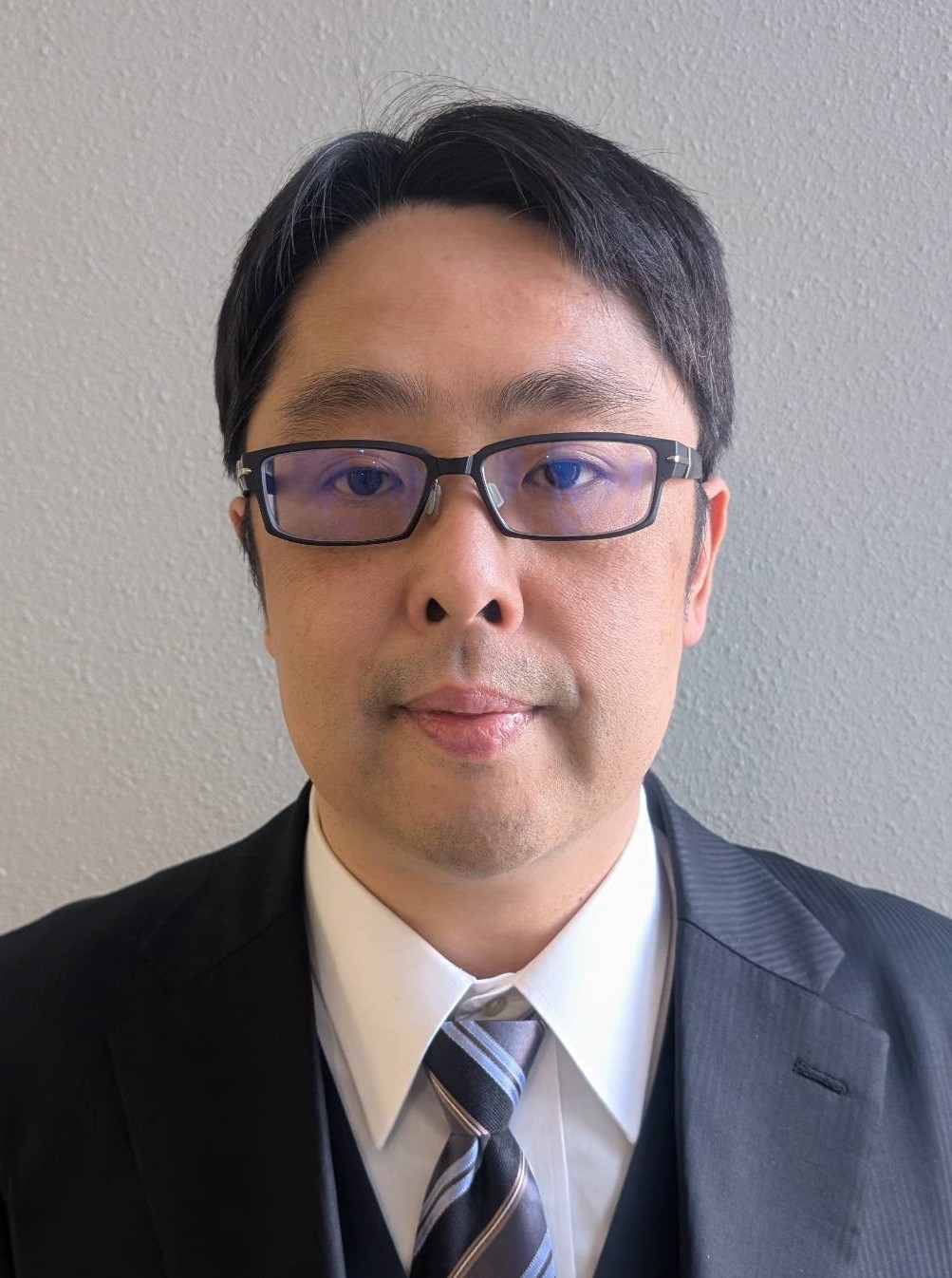
Prof. Takayuki Yanagida, Nara Institute of Science and Technology, Japan
Recent R&D of scintillators and storage phosphors for radiation measurements
Luminescent materials have played an important role for ionizing radiation detection, and these materials are roughly divided into two groups, including scintillators and storage phosphors. In this presentation, recent R&D of luminescent materials for radiation detection and some of new applications will be introduced.

Dr. Isabelle Monnet, French National Centre for Scientific Research, France
Isabelle Monnet earned her PhD in Materials Science in 1999 from the École Centrale de Paris, focusing on the microstructural evolution of oxide dispersion-strengthened alloys under irradiation. After two years on a temporary contract, she joined the CEA in 2001, working in a department specializing in nuclear materials. In 2004, she moved to the Centre de Recherche sur les Ions, les Matériaux et la Photonique (CIMAP, UMR 6252). Following a decade of research on the effects of swift heavy ions on materials, she led the MADIR team (Materials, Defects, and Irradiation) from 2013 to 2020. Since 2020, she is the director of CIMAP, which comprises 48 researchers and 23 engineers and technicians.
Her research, ongoing since her thesis, centers on the effects of low-energy and swift heavy ions on materials, primarily using transmission electron microscopy. She has been involved in numerous European and national projects related to irradiation. She also served as deputy director of the French federation EMIR&A, a network of accelerators dedicated to the irradiation and analysis of molecules and materials.
Isabelle Monnet is the author or co-author of over 120 publications and is a member of the scientific committees of two major conferences in the field: SHIM and REI.
https://orcid.org/0000-0002-3821-6670
Prof. Shigeki Aoki, Professor Emeritus, Kobe University, Japan
Nuclear Emulsion: A Tracking Detector for a Novel Gamma-Ray Telescope in GeV/sub-GeV Band
Nuclear emulsion is a charged particle detector with the highest spatial resolution based on the silver-halide photographic principle. It records three-dimensional tracks of charged particles with submicron accuracy. Nuclear emulsion is well known for its use in the discovery of the Yukawa meson by C.F. Powell et al. in 1947. By overcoming the disadvantage of time-consuming scanning and analysis, nuclear emulsion films have continued to produce important results in various fields.
GRAINE, which stands for Gamma-Ray Astro-Imager with Nuclear Emulsion, is a cosmic gamma-ray observation project using a balloon-borne emulsion telescope. Gamma-rays in GeV/sub-Gev band are detected via pair production, and the incident direction can be determined by measuring electron-positron tracks immediately after the conversion with a small material thickness (.002 radiation length par film). Owing to this small material thickness, the angular resolution can approach the fundamental kinematical limit: 0.1° for 1 GeV gamma-ray (1.0° for 100 MeV). In addition, polarization information can also be obtained. By conducting repeated balloon flights with an emulsion telescope featuring a large aperture area (10m2) and a wide field of view (from the zenith to a zenith angle of 45°), GRAINE is expected to provide qualitatively new data of gamma-ray sources with unprecedented angular resolution and polarization sensitivity in gamma-ray astronomy of GeV/sub-GeV band.

Prof. Rajesh Kumar, Guru Gobind Singh Indraprastha University, India
Radiation Induced Functional Modifications of Engineering Polymers/ SSNTDs and Their Potential Applications
In this talk we are briefly described the basic methods of radiation/ion beam-induced modification of engineering polymers and their applications. Swift Heavy Ion and Gamma irradiation techniques are playing a crucial role for modifications in structural, chemical, optical and surface morphological properties of materials [1-4]. The energy loss of the incident ions described by the mean depth at which particle is embedded. Trajectory of incident ion described by the elastic and inelastic collision, high energetic ions (>2MeV) interact in elastically with the target and electronic energy stopping (Se) occur similarly low energetic ions (It has been well established that when polymers are subjected to radiations (ions or gamma radiations), the processes like radical formation, chain scission, cross-linking, formation of double or triple bonds, etc. take place with the emission of light gaseous products. The efficiency of these modifications depends on the structure of materials/polymers and the ion beam parameter (energy, fluence, mass, charge etc.) and nature of the target. Positron Annihilation Lifetime Spectroscopy (PALS) is a unique, non- destructive technique and capable of determining size distribution, fraction and density of free volume holes in polymers. Ortho-positronium (o-Ps) pick off annihilation lifetime, the long-lived component in the lifetime spectra, is very sensitive to structural changes in the polymers and is correlated directly to the free volume hole size. The industrial and biomedical high grade quality polymers were purchased from Good fellow, U.K. and Bayer A.G., Germany and some polymers were synthesized by chemical method. Solid State Nuclear Track Detectors were irradiated and exposed to gamma radiation at different fluencies and different doses at Variable Energy Cyclotron Centre (VECC), Kolkata, India and Inter University Accelerator Centre, New Delhi, India. After modified engineering polymers/materials by SHI and Gamma radiation were characterized by different techniques such as: Positron Annihilation Lifetime Spectroscopy (PALS), Atomic Force Microscopy (AFM), Scanning Electron Microscopy (SEM), X-ray Diffraction (XRD), Fourier Transform Infrared Spectroscopy (FTIR) and UV-visible Spectroscopy [5-11]. The aim is to investigate the behaviour of the effects of the irradiation as well as gamma radiation as the size of the nano scale free volume in SSNTD’s material is varied. The results will be discussed during the presentation.
References:
- Rajesh Kumar, P. Singh: Applied Surface Science: 337 (2015)19-26 (Elsevier).
- P. Singh, Rajesh Kumar, R.Singh, A. Roychowdhury, D. Das: Applied Surface Science 328 (2015) 482-490 (Elsevier).
- S. K.Gupta, P.Singh, R.Singh, Rajesh Kumar: Advances in Polymer Technology: DOI 10.1002/adv.21518(1-7) (Wiley)
- S. K. Gupta, P. Singh, Rajesh Kumar: Vacuum 121(2015)177-186 (Elsevier).
- Vishnu Chauhan and Rajesh Kumar, Materials Chemistry and Physics, 240 (2020) 122127, (Elsevier).
- Vishnu Chauhan, Deepika Gupta, N. Koratkar, and Rajesh Kumar, Scientific Reports, 11 (2021)1-16 (Springer).
- Rajesh Kumar, Vishnu Chauhan et al. Journal of Alloys and Compounds, 831 (2020) 154698, (Elsevier).
- Vishnu Chauhan, Rajesh Kumar, et al., Ceramics International, 45 (2019) 18887-18898 (Elsevier).
- Rajesh Kumar, Vishnu Chauhan et al., Physics Letters A 383 (2019) 9601 (Elsevier).
- P. Singh, Rajesh Kumar, P.M.G.Nambissan: Vacuum 115(2015)31-38 (Elsevier).
- P. Singh, Rajesh Kumar, Jincemon Cyriac, M.T. Rahul, P.M.G. Nambissan, R. Prasad: Nucl. Instr. Meth. B 320, (2014)64-69(Elsevier)
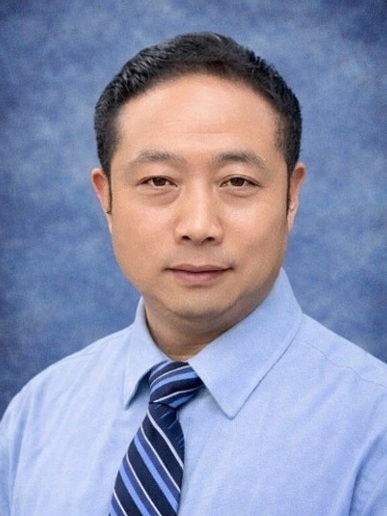
Prof. Jinglai Duan, Materials Research Center, Institute of Modern Physics, Chinese Academy of Sciences, China
Professor Jinglai Duan is Director of the Materials Research Center at the Institute of Modern Physics, Chinese Academy of Sciences. He is a recipient of the National Science Fund for Distinguished Young Scholars of China. Prof. Duan has worked on the science and technology of ion tracks in solids, including ion?solid interactions, fine structure of ion tracks, and fabrication of novel functional nanostructures based on ion tracks. Prof. Duan has published more than 100 journal papers, holds dozens of patents. He is the recipient of the First Prize of Gansu Provincial Science and Technology Progress Award and the First Prize of Gansu Provincial Patent Award. He serves on the editorial boards of international journals and is a fellow of multiple scientific societies.
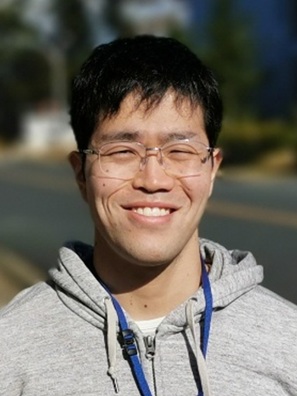
Dr. Yuho Hirata, Japan Atomic Energy Agency, Japan
Simulation of Electron Track Structures in Ion Tracks Using PHITS and Analysis of Radiation Detector Responses
The microscopic spatial distribution of excited electrons generated by radiation interactions is an important factor governing signal formation in radiation detectors. Track-structure simulation in PHITS enables the explicit calculation of individual interactions in detector materials, providing information on the generation and spatial distribution of excited electrons at the microscopic scale. Such information can be used to investigate signal formation mechanisms within charged-particle tracks, including charge generation, transport, and collection processes.
In this talk, the concept of track-structure analysis in PHITS will be introduced, together with representative simulation studies related to radiation detector response.
■Education and employment history
2020 Mar. Ph.D., Nagoya University
2020 Apr. Post-doctoral fellow, Japan Atomic Energy Agency
2023 Apr.- Researcher, Japan Atomic Energy Agency
■Major professional accomplishments
Yuho Hirata is a researcher at the Nuclear Science and Engineering Center, Japan Atomic Energy Agency (JAEA), and a member of the PHITS development team. His research focuses on the analysis of radiation detector responses. He has worked on the development of phosphor-based detectors, response prediction methods for luminescence-based radiation detectors using PHITS, and electron track-structure models for semiconductor and insulator materials. More recently, he has been engaged in nanoscale analyses of radiation interactions to advance the physical understanding of radiation detection mechanisms and improve the accuracy of detector response evaluation.
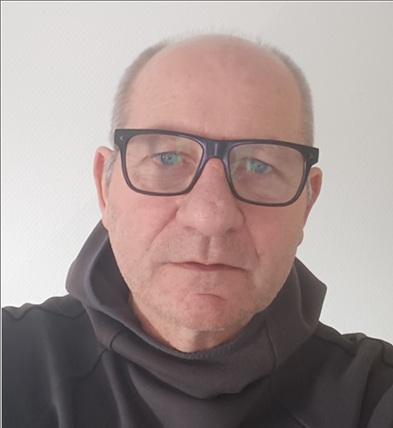
Prof. Michel Fromm, Marie and Louis Pasteur University, France
Michel Fromm defended his PhD thesis in Physical Chemistry at the University of Franche-Comté (now Université Marie et Louis Pasteur) in 1991 on a topic relating to neutron dosimetry and alpha micro-mapping using the CR-39 nuclear track detector. He has continued to conduct research relating to this detector throughout his career.
He has also established several international collaborations, which led him to work with Professor Léon Sanche (Sherbrooke, Canada). His team has produced and characterised nanometre-scale deposits of plasmid DNA complexed with molecules of biological interest (amino acids). The collaboration enabled to analyse the resonant dissociative attachment of low-energy electrons (1–15 eV) to DNA and other smaller molecules.
More generally, his research aims to gain a detailed understanding of the effects of ionising radiation on living or inert matter. The use of an ultra-soft X-ray generator (1.5 keV) has revealed the contribution of hydrogen peroxide to the radiosensitising effect of gold nanoparticles. This work is currently being continued in collaboration with a Japanese team from the National Institute of Radiological Sciences, Chiba (NIRS).
Current position:
Full Professor (Pr-1) at the University Marie et Louis Pasteur (Physical Chemsitry).
23 (WoS) < H-Index < 28 (GS), 1553 (WoS) < Citations < 2388 (GS)
Education:
1990: Ph. D. Thesis in Physical Chemistry; Evaluation of the potential of an isotropic polymer (CR39) as a nuclear track detector for neutron dosimetry and alpha micromapping. Universite de Franche-Comte, Besancon #181
TEACHING ACTIVITIES:
Physical Chemistry. Analytical, Radiation and General Chemistry.
RESEARCH TOPICS:
Main areas of research
Study of the Track Structure in Polymers, Water Radiolysis & Radiation Chemistry, Radiation Chemistry of Gold Nanoparticles. Low energy electrons dissociative attachment and Ultra-soft X-rays effects on DNA.
Secondary research areas
Tritium in the environment. Radiation biology.
Supervision or co-supervision of 23 PhD's.
114 publications, 76 of which in A-ranked journals (Impact Factor ? 1), and 38 in international conference proceedings.
63 oral presentations at international events ? 35 at national events. 5 international guest seminars, 4 national guest seminars.
Edited two volumes of conference proceedings.
One book chapter ? White Paper on Tritium: C. Boyer, P. Guetat, M. Fromm, L. Vichot, Y. Losset, F. Tatin-Froux, C. Mavon, P.M. Badot. Study of tritium transfer to plants, Chapter IV, p. 211.
h-index: 30, I10-index: 71.